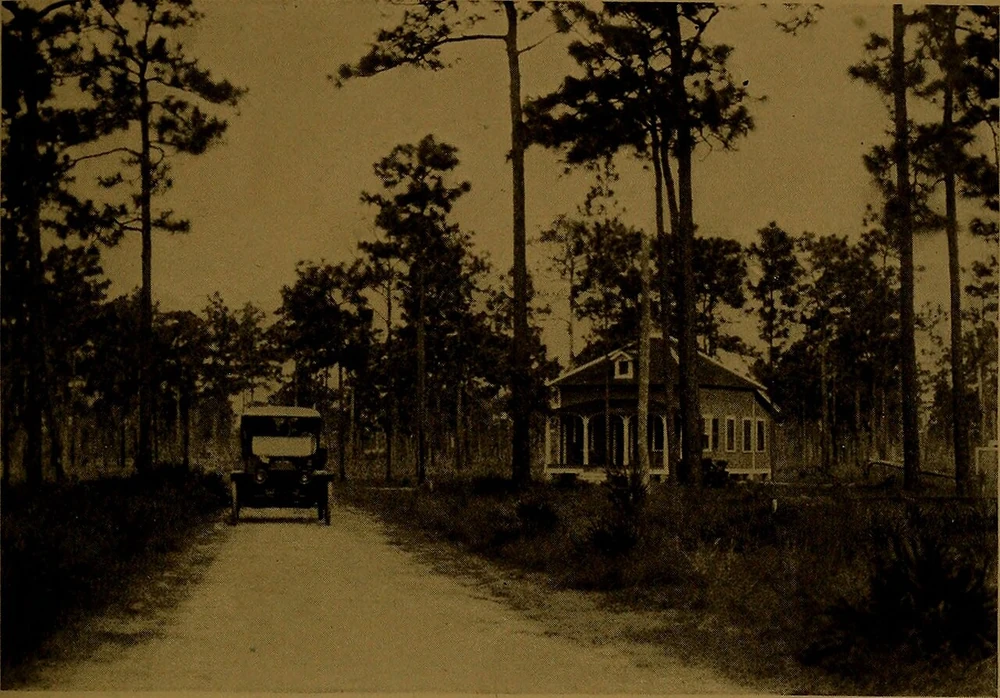
Ten dollars down, ten dollars a month — and in a few years, the advertisements promised, a Florida orange grove that would pay you something like ten thousand a year for the rest of your life. That was the pitch, printed up North around 1909. Thousands of people took it. Most of them bought land they had never seen, in a town that barely existed yet, named after the man who happened to be sitting in the White House.
The town was Taft, about eight miles south of Orlando. And the first real question about it is the one those buyers never got to ask from their kitchen tables up in Illinois: what was actually out there?
The far side of nothing
The answer was room. Miles of it — flat, wet, pine and palmetto, stitched together by two slow creeks. Boggy Creek ran east, Shingle Creek ran south, and all of it sat just a little above the waterline of Lake Tohopekaliga. It was the kind of country you could buy by the square mile, because almost nobody else wanted it.

Being empty was the whole opportunity. Cheap, flat, and close enough to a railroad that you could get a crop out — if you could grow one. The land hadn’t done much for anyone yet. The trick was convincing a stranger that it was about to.
Prosper Colony
In 1909 two men decided the emptiness itself was a product. One was Braxton Beacham, who had lately been mayor of Orlando; the other was W. L. Van Duzor, down in Kissimmee. Together they took a tract of sixty thousand acres of this scrub and did something that sounds more like an internet scheme than the horse-and-buggy era: they cut it into about three thousand little farms and sold them on the installment plan.
They called the whole thing Prosper Colony. Five acres, ten acres, a town lot thrown in — pay a bit every month, and when the last payment cleared, a warranty deed came in the mail. You could walk your exact piece of ground and choose it, or you could choose it off a map from a thousand miles away. Plenty of people did the second thing.
Prosper Colony — Taft, Fla.
“$10 down and $10 a month.”
A tract of “sixty thousand acres,” midway between Kissimmee and Orlando, cut into five- and ten-acre farms with a town lot — about three thousand of them “placed on the market.” Two railroads run through it. And the colony’s own argument for the small farm: “five acres are more than enough to supply a family’s needs in this part of the state.”
— from the promoters’ notice, Kissimmee Valley Gazette, September 3, 1909
Why a swamp gets the President’s name
The land had already worn out a few names by then. A man named Newelton had settled in back in 1884 and named it after himself; then it was Big Cypress; then Smithville, after a developer who ran turpentine stills out here. None of those names sells a grove to a stranger.

Taft did. William Howard Taft had just become President, in that very same 1909, and nothing says a place is a safe bet like borrowing the name of the man running the whole country. So the new town on the plat became Taft — even though, despite a local legend that refuses to die, the President himself never once set foot in it.
The land was cheap because it was wet and empty. The whole business was a bet that both of those things were only temporary.
Five acres and a fortune
What were you actually buying? On paper, independence. The sales talk held that five acres in this part of Florida were more than enough to feed a family, and the real money would come from citrus — set out orange trees, wait for them to bear, and let the grove pay you like a pension you never stopped collecting.

And for a stretch it wasn’t a fairy tale. The soil really did carry rich muck and hammock in it, and the higher sandy patches really did grow oranges. A town grew up to go with the groves.
The railroad put in a depot in 1910. Taft got a mayor, a post office, electric lights, a jail, and — the detail that tells you a place believes in itself — a policeman on a motorcycle. Turpentine, lumber, and farming all ran at once, and the fruit went into crates and rode north on the Atlantic Coast Line.

The catch was the water
But the thing the brochures skipped right past was sitting there in one word: muck. Muck is what you call soil that’s half swamp. Before it grows you a pension, it has to be dry — and this land was anything but.
So the real monument of boom-time Taft isn’t the depot or the park they drew on the plat. It’s the ditch. In 1913 the town set up the Taft Drainage District — a whole little government whose only job was to dig the water back out and keep it out. Thousands of acres sold as ready-made farms turned out to need draining first, one canal at a time.

You kept building on the room
Here’s the part that outlasted the sales pitch. The people who actually came and stayed did the oldest Florida thing there is: they bought their ground, and then they built onto it as needs came up. A house. Then a barn. A packing shed. A pen for a few head of cattle. A second little place out back when family turned up.
You never really finished buying a farm out here. You just kept building on the room. The five acres weren’t a thing you owned so much as a thing you added to — which is exactly why so much of the colony is still legible today, long after the orange-grove math stopped working.
What the room became
Because the grove-as-pension dream mostly didn’t pan out the way the ads drew it. Freezes, drought, then the Depression — Florida collects on optimism about once a generation — and in 1933 Taft quietly gave up its town charter and went back to being a wide spot on the map.
Then the century turned the room into something nobody in 1909 could have pictured. Quiet, flat land beside two rail lines, a few miles from Orlando, turned out to be perfect for one very modern crop: warehouses. Today Taft is wrapped around Orlando International Airport, and the old colony grid is lined with loading docks — UPS, FedEx, the names on the trucks that now haul what oranges used to.

What’s still here
Look closer, though, and the colony hasn’t gone anywhere. The street grid Beacham and Van Duzor laid out is still the street grid. The creeks still run where they ran. And the lake they platted it all along is still sitting there, doing nothing in particular, the way it was before anyone tried to sell it.

The neighborhood that stuck it out even made a landmark out of the name — the borrowed one that was supposed to make a swamp sound safe. It’s a point of pride now, which is about the best thing that can happen to a sales gimmick.

The oranges-as-salary never really arrived. The President never arrived at all. But the one thing the colony was genuinely selling — room, out past the edge of the city — came through completely. It’s still the whole story of this place. The only thing that’s changed is what people decide to build on it.


