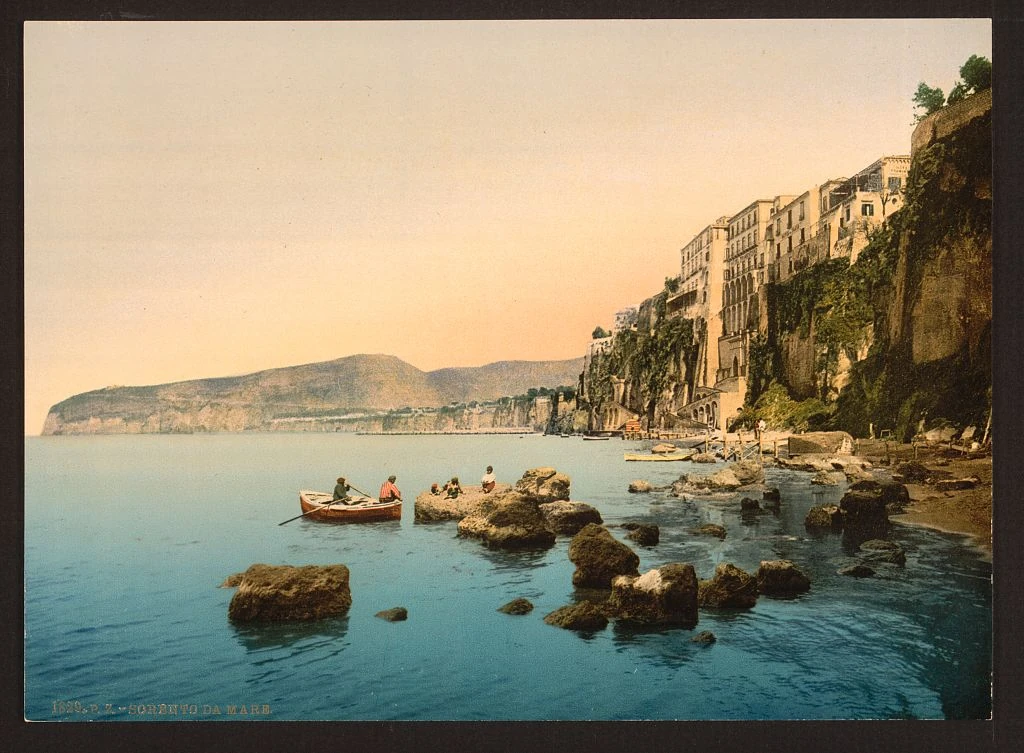
Somewhere around 1875, a handful of families settled a flat, piney stretch of what is now east Lake County, cleared a few acres each, and gave the place a name that didn’t fit it at all. Not a swamp name, not a settler’s name. They called it Sorrento — after the town on the Italian coast famous the world over for its oranges and lemons.
It was a strange thing to call a patch of Florida scrub forty miles from any coast. But it tells you exactly what they were betting on. The first question about Sorrento is the one the name was quietly answering: why would anyone plant their whole future on a single fruit?
The name was the pitch
The plan came before the people. A town called Sorrento was drawn up on paper back in 1870, laid out east of Mount Dora in country that “seemed ideal for small subsistence farmers who could clear the land.” The idea was to sell that land to Northerners worn out by winter — come down, clear your piece, put in citrus, and live the way they imagined people lived on a sunny hillside in Italy.
The William Butts family arrived in 1875, and the Kerrs, Reeves, and Miners came behind them. That same year five bachelors from Ohio turned up; one of them, Albert Matlack, surveyed and mapped the town, and another, Ed Averill, put up the first little hotel for the tourists they were sure would follow. An Italian orange town needed an Italian orange town’s name. So that’s what it got.

What you really bought was room
Here’s the thing the name skipped over. Nobody was handing you a hillside in Italy. You got pine flatwoods and palmetto and sand, and the first job was clearing enough of it to plant. What the land actually offered, in bulk and cheap, was room — acres of it, more than any one family could use at once.
And they used it the old Florida way: a little at a time, adding on as they went. You cleared a few acres and set out orange trees. Then a house. Then a barn, a packing shed, a pen for a few cattle. Peach orchards went in beside the groves. Dairy herds, horse ranches, a brick kiln, a lumber mill, a turpentine still — all of it spreading out across ground that had room to spare.

A church came, and a schoolhouse, a drugstore, a post office, packinghouses. For a stretch there in the 1880s it worked about the way the brochures promised. Sorrento was becoming a real town, carved out of the woods, with the groves at the center of everything.
The crop that was supposed to pay forever
Citrus was the point of all of it. Set out your orange trees, wait a few years for them to bear, and then the grove paid you every winter like clockwork — a crop you could ship north when the rest of the country was buried in snow and willing to pay almost anything for a fresh orange.

The last piece the growers needed was a way to get the fruit out. For years that was the hard part — good land, no railroad. It finally came late in the 1890s, when a rail line pushed through and put Sorrento about eighteen miles from Sanford, close enough to load crates and send them north.

Land, trees, a railroad, a market up North hungry for oranges. For a few good winters, the bet looked like a sure thing.
Two nights
Then came the winter of 1894 and 1895. Two freezes, about six weeks apart. The first, right after Christmas, hit hard. The second, in February, came after a warm spell had coaxed the trees into thinking spring had arrived — and it was far worse. Across the Florida citrus belt, groves that had taken twenty years to grow were killed to the ground in a night.

Lake County lost about ninety-nine of every hundred trees it had. Think about what that number means to a place that had bet everything on one fruit: not a bad year, not a dented harvest — the entire crop, and most of the groves that made it, simply gone. Land that had been worth a small fortune an acre went begging. A lot of families packed up and left for good.
The whole town had been built on a single crop. In two nights, that crop stopped existing.
The room is what saved them
Except Sorrento didn’t vanish. And the reason is the thing the fancy Italian name never mentioned.
The families who stuck it out didn’t have a grove anymore. What they still had was land — room, the same room that had been there all along. So they did what the name never told anyone to do: they stopped betting on one thing. Where a grove had been, they ran cattle, or milked a dairy herd, or put in peaches, or cut timber, or worked a turpentine still. The orange trees came back, slowly, for those who replanted. But nobody in Sorrento ever put all their eggs in that one basket again.
That’s the quiet lesson buried in a frozen grove. The place survived not because it guessed the right crop, but because it had enough ground to be wrong and keep going. Room is what lets you change your mind.
Next door, the opposite bet
You can see the other way of doing it just up the road. In the 1920s, during Florida’s great land boom, a developer named Carl Dann poured something like a third of a million dollars — in 1926 money — into a grand Mediterranean-style hotel and country club called Mount Plymouth, with plans for four golf courses modeled on the famous links at St. Andrews in Scotland.

It was gorgeous, and it was a single, enormous bet on one idea — the resort. The land boom cracked that very year. Three of the four golf courses were never finished. The grand hotel limped along, became a school, sat empty, and finally burned in the 1980s. The all-or-nothing play didn’t make it. The spread-out farm families a few miles away, the ones who’d learned to keep their options open, did.
What the room became
Sorrento today is a quiet, unincorporated piece of Lake County on the northeast edge of the Orlando metro — the kind of place where plenty of acreage is still acreage, even as the subdivisions build up around it. The endless groves are mostly gone. But the room out back never went anywhere.

Now a parkway connects this old grove country straight into the city, and the newest crop planted out here is houses. But under all of it, the thing that defines Sorrento is still the thing it started with and the thing that carried it through the worst winter it ever had: land enough to build what you need, and change what you build when you have to.
The Italian name was a bet on one perfect crop. The crop froze. The room outlasted every bet anyone ever laid on it — and it’s still out there, behind the house, waiting on whatever you decide to put on it next.


