Reserve at Cypress Point · Dr. Phillips, Orlando, Florida  ·  A Local History

Dr. Phillips Wasn’t Really That Kind of Doctor


His name is on the hospital, the high school, the concert hall, and the neighborhood. The reason why is buried under a gated street where thirty houses stand now, ground that was once a sea of orange trees owned, every last one, by a man everybody called Doc.

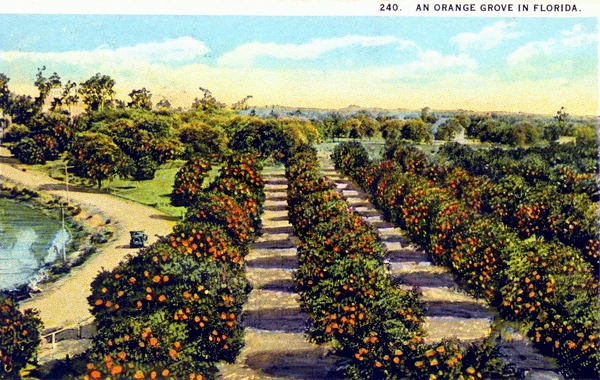
A tinted old postcard of a Florida orange grove, rows of fruit-laden trees running back toward a distant lake and treeline under a pale sky.
Orlando, back when the whole view was trees
The ground before the gate. “An Orange Grove in Florida,” a tinted postcard postmarked 1925, the kind of planting that covered the southwest side of Orlando for most of a century. Via Wikimedia Commons.

Drive the southwest side of Orlando and the same name keeps landing on you. Dr. Phillips Hospital. Dr. Phillips High School. The Dr. Phillips Center for the Performing Arts downtown. A whole neighborhood of lakes and gated streets just called Dr. Phillips. Most people who live there assume it’s named for some beloved old physician who stitched up the town’s kids.

He did have a medical degree. He just never really used it. The name is on all of that because of oranges, millions of them, and because of a gated street now called the Reserve at Cypress Point, where the trees used to run right down to the water.

The doctor who never doctored

His name was Philip Phillips, born in Memphis in 1874, and he picked up an M.D. at Columbia in New York, which is where the nickname “Doc” came from and stuck for the rest of his life. He came to Florida in 1894 with a grubstake from his father and bought a young orange grove up at Satsuma. That first winter, the Great Freeze of 1894–95 came down the state and killed the trees in the ground. Doc gave up and went home to Tennessee.

A formal studio portrait of Philip Phillips, a clean-shaven man in a dark suit and bow tie, hair combed back, looking steadily at the camera.
“Doc”. Philip Phillips
The man the name belongs to. Philip Phillips, who trained as a physician and became the largest orange grower in the world instead. Portrait via Capital Research Center / Dr. Phillips history.

Here’s the part that matters: he came back. In 1897 he bought land down in Osceola County and ran cattle and groves on it, and in 1905 he picked up a grove on the south side of Sand Lake, near Orlando, and moved his family out to it. Then he did the thing that built everything that has his name on it now. He kept buying ground.

All of it, as far as you could see

By the 1920s the groves ran from Conroy Road in the north clear down to the bottom of the Sand Lake chain of lakes, all of what is now Bay Hill, Sand Lake Hills, Orange Tree, and Turkey Lake Park. Five thousand acres of it, scattered across nine different Florida counties, with the home place out here by the Sand Lakes. Stand anywhere on the southwest side back then and the view in every direction was somebody’s orange tree, and that somebody was usually Doc.

A historic aerial photograph of a Florida citrus packing house and a few outbuildings, ringed on every side by the orderly rows of an orange grove, with a lake along one edge.
The room it took to grow that many oranges
The empire was mostly space. A historic aerial of a Central Florida citrus packing house hemmed in by its own grove rows and a lake, the kind of planting that ran for miles across the southwest side of Orlando. Period photograph, via Florida Backroads Travel.

At the peak, the operation sold better than a hundred million oranges in a single year, enough that if you’d handed one to every person in the country at the time, you’d still have had tens of millions left rolling around the packing house floor. That made Doc, plainly and on the record, the largest citrus grower in the world.

The thing he actually invented

Growing the fruit was never the clever part, though. Shipping it was. Fresh oranges bruise, rot, and travel badly, and the obvious fix, canning the juice, made a mess of the taste. The acid in the juice ate at the tin and left every can tasting faintly of metal and faintly of having been cooked. Nobody wanted to drink it.

A vintage wrap-around can label reading Dr. Phillips Tri-Juice, with lithographed oranges and the line a blend of tangerine, orange and grapefruit juices, from the Dr. P. Phillips Canning Co., Orlando, Florida.
Dr. P. Phillips Canning Co.. Orlando
A brand, not just a fruit. A real Dr. Phillips “Tri-Juice” can label from the Dr. P. Phillips Canning Co. in Orlando, a blend of tangerine, orange and grapefruit juice, even sold as “recommended for children.” Doc shipped under several brands, Dr. Phillips, Zest, and Two Brothers among them. Vintage label, via the research record.

So around 1931 Doc worked out a process he patented, called flash pasteurization, heat the juice hot and fast, hot enough to kill what spoils it but quick enough that the flavor never has time to cook out. It fixed the can. His plant was soon turning out twenty-four thousand cans of juice a day, and he leaned on his old medical training to sell it, slapping a line on the label that read, more or less, drink Dr. Phillips’ orange juice because the Doc says it’s good for you. That is the reason, not the trees, the juice, that his name ended up on a hospital.

A 1937 black-and-white photograph inside a Florida citrus packing plant: rows of workers in aprons standing at long grading tables covered in fruit, under a high-beamed roof.
Where the fruit became something you could ship
The clever part. Workers grading citrus in a Florida packing plant at Fort Pierce, January 1937, the kind of operation where flash pasteurization turned a grove into a product. Photograph by Arthur Rothstein for the Farm Security Administration; Library of Congress, via Wikimedia Commons.

The people out among the trees

An operation that size runs on hands, not machines, and in the busy months Doc had better than a thousand people on the payroll. Groves are seasonal, though, so he did two things most growers didn’t. He built housing and even a post office out among the trees for his grove hands, a lot of them families who’d come over from the Bahamas, a little company town in the middle of the citrus. And to keep people employed in the slow season, he put them to building things, running a construction outfit on the side so the layoffs never came.

Orange pickers at work in a Florida grove, a worker on a tall ladder reaching into the canopy, wooden crates of fruit on the ground below, from an old tinted postcard captioned Orange Picking Time in Florida.
Picked by hand, a ladder at a time
The work. Orange pickers in a Florida grove. An operation on Doc’s scale needed over a thousand of them in season. Period image, via Wikimedia Commons; a representative grove-labor scene of the era.

Doc himself didn’t live out in the groves. His family home was a columned house on Lucerne Circle in downtown Orlando, known around town for music nights. The man lived in the city; the empire lived out here, in the room between the lakes.

The front of the Dr. P. Phillips House in downtown Orlando, a yellow two-story home with four tall white columns, a pair of stone lions flanking the brick steps, and double front doors.
The Doc’s house, in town
Where the money slept. The Dr. P. Phillips House on Lucerne Circle in downtown Orlando, the family home. Present-day photograph, via Wikimedia Commons.
The trees needed room more than anything else. That one requirement, space, and a lot of it, is the only part of the whole story that outlived the oranges.What the groves left behind

The slate cleared

In 1954, after sixty years of it, Doc sold the citrus business to Minute Maid and got out of oranges. He kept the land holdings and the construction money, which is how a grower turned into the philanthropist whose foundation still writes checks all over Central Florida today. But the groves themselves were suddenly just acreage, and acreage this close to a growing city has one obvious future.

The trees came out. The subdivisions went in. The same ground that grew Doc’s oranges became Bay Hill, where a man named Arnold Palmer would eventually hang his golf course, and Sand Lake Hills, and the whole run of restaurants and shops that people now just call Restaurant Row along Sand Lake Road.

A Dr. Phillips area lake at sunset today, open water glowing orange, tall palms silhouetted along the shore and a band of reeds in the foreground.
The water the groves were planted around
Still here. A lake on the Sand Lake chain in the Dr. Phillips area at sunset today. The oranges are gone; the lakes and the room are not. Present-day photograph.
A present-day Mediterranean-style retail plaza on Sand Lake Road in the Dr. Phillips area, tan stucco buildings with tiled roofs, awnings and storefronts along an empty sidewalk.
What grows on the grove ground now
The new crop. Part of the Sand Lake Road “Restaurant Row” in the Dr. Phillips area today, built on the old grove land. Present-day photograph.

Room, behind a gate

Which brings us to the thirty houses this whole page started with. The Reserve at Cypress Point is a gated enclave off Apopka-Vineland Road, built in the years around 2000 on Point Cypress Drive, a short walk from the same Sand Lake water Doc’s groves were planted beside. Big custom homes on big lots, some of them pushing seven thousand square feet, about as far from a grove-hand’s cottage as a building gets.

The landscaped brick entrance monument of a gated community, lettered The Reserve at Cypress Point, with a Point Cypress Drive street sign beside it and clipped hedges along the road.
Thirty houses, on the grove ground
The newest thing on Doc’s land. The brick entrance to the Reserve at Cypress Point, off Point Cypress Drive in the Dr. Phillips area. Present-day photograph.

But look at what those houses actually are, underneath the size. Somebody got a piece of ground with room on it, near the same lakes Doc prized, and built the biggest thing they wanted on it. That is not a new idea here. It is the oldest idea here. Doc did it with five thousand acres and a hundred million oranges. The homesteaders before him did it with a house, a barn, and a few trees. And the name on the hospital and the high school and the concert hall never really stood for a doctor at all. It stood for the room, the thing it takes to grow that much, and the one thing a gate, a golf course, and seventy years of Orlando filling in around it still haven’t managed to use up.

A present-day note · Orange Tiny Homes

The room out back is the whole Central-Florida story. You probably already have some.

Strip the size off the houses on Point Cypress Drive and you’re left with the plainest thing this part of Florida has ever done: somebody with a little room built the thing they needed out on it. Doc did it a grove at a time, across nine counties. The lakefront owners do it at the scale a fortune buys. Same instinct, wildly different budget.

And the sane, affordable version of that instinct is alive on ordinary lots all over Orange County. It just goes by a smaller name now. An ADU, an accessory dwelling unit. A granny flat so a parent can live close with their own front door. A guest house. A rental out back that helps carry the mortgage. A tiny home tucked in the far corner of the yard. The same move the whole county was built on, minus the groves and the acreage.

And you don’t need a lot on Sand Lake to do it. Sure, out toward Bay Hill and Windermere, but just as much on regular lots in Conway, Pine Hills, Azalea Park, Rio Pinar, Meadow Woods, Winter Garden, and unincorporated Orange County. The room is usually already there. What actually decides it comes down to your own address:

The real answer to “is there room out back for this?” isn’t a guess. It’s a handful of facts about your lot, and those we can check for you.

Put in your address and we’ll pull what your parcel allows and tell you whether a granny flat, guest house, rental, or tiny home actually fits, before you spend a dollar on drawings.

Start the ADU Fit Check→
Sources & Photo Credits

On the history

Where accounts differ, the page uses rounded, hedged language: the grove acreage (“five thousand acres”) and the “100 million oranges in one year” are widely reported figures for the operation at its peak, not a Reserve-at-Cypress-Point–specific count; the Dr. Phillips brand names, the ~24,000-cans-a-day figure, and the ~thirty-home size of the Reserve are drawn from the sources above. The marketing line about drinking the juice is paraphrased from the documented label, not quoted verbatim. Full notes are in source-record.md beside this page.

Photographs & documents

  1. “An Orange Grove in Florida” (hero), a tinted postcard of a Florida orange grove in rows, postmarked 1925. State Archives of Florida / Florida Memory, via Wikimedia Commons. A representative Central Florida grove of the citrus era. File: orange-grove-hero.
  2. Philip “Doc” Phillips, studio portrait of the citrus grower. Via Capital Research Center / Dr. Phillips history. File: dr-philip-phillips-portrait.
  3. Aerial of a Florida citrus packing house and groves, a historic aerial of a packing house ringed by grove rows beside a lake. Via Florida Backroads Travel. A representative Central Florida grove scene of the era. File: orange-groves-wide.
  4. Dr. Phillips “Tri-Juice” can label, a genuine wrap-around can label from the Dr. P. Phillips Canning Co., Orlando, a blend of tangerine, orange and grapefruit juice. Vintage label, via the research record. File: dr-phillips-can-label.
  5. Grading citrus in a Florida packing plant, Fort Pierce, Florida, January 1937. Photograph by Arthur Rothstein, Farm Security Administration; U.S. Library of Congress FSA/OWI Collection, via Wikimedia Commons. A representative period Florida citrus plant, not a Dr. Phillips facility. File: citrus-packing-plant.
  6. “Orange Picking Time in Florida”, grove workers on ladders harvesting fruit, a tinted Curt Teich postcard of the era. Via Wikimedia Commons. A representative grove-labor scene. File: florida-orange-pickers.
  7. Dr. P. Phillips House, the family’s columned home at 135 Lucerne Circle in downtown Orlando, present day. Via Wikimedia Commons. A modern photograph of the historic house. File: dr-phillips-house.
  8. A Sand Lake–chain lake in the Dr. Phillips area, open water at sunset, palms and reeds along the shore, present day. A modern photograph, via the research record. File: sand-lake-today.
  9. Restaurant Row on Sand Lake Road, a present-day retail plaza in the Dr. Phillips area, built on the former grove land. A modern photograph, via the research record. File: restaurant-row-today.
  10. Reserve at Cypress Point entrance, the brick entrance monument lettered “The Reserve at Cypress Point” with the Point Cypress Drive street sign, present day. A modern photograph, via the research record. File: cypress-point-today.

Original downloads and the full research record are kept alongside this page in assets/images/originals/ and source-record.md. The period images (the 1925 grove postcard, the packing-house aerial, the 1937 Fort Pierce packing plant, and the orange-picker postcard) are labeled above as period or representative where they are not a specific documented Dr. Phillips property; the portrait is identified as Philip Phillips and the “Tri-Juice” can label is a genuine Dr. P. Phillips Canning Co. artifact; the house, the lake, Restaurant Row, and the Reserve entrance are modern. No image was altered in a way that changes its content; a few scans were downscaled for the web, the small listing-photo watermark was cropped off the Reserve-entrance photo, and the Polaroid frames and handwritten notes are CSS added around the images, never onto them.