Pull up to the stop sign where Lake Cawood Estates meets the main road and read the street sign. Winter Garden Vineland Road. Vineland. In a county that stamps an orange on everything it owns, that is a strange word to find bolted to a pole.
The word is a leftover. It points down the road toward a town that is mostly gone now, and behind the town sits a stretch of years when some of the shrewdest growers in Central Florida looked at this scrub and sand and saw rows of grapes. Not oranges. Wine.
So here is the thing worth idling at the stop sign to ask. How does a place this married to citrus end up with a wine name on the road out front, and who in the world looked at orange country and planted a vineyard?
Orange country, and a stranger idea
Start with the ground. Lake Cawood is a forty-four-acre pond sitting in the big-lot country west of Orlando, one of a whole chain of lakes strung out toward Windermere and Lake Butler. For a hundred years this land did one thing for a living, and that was citrus, with cattle running the open scrub wherever the groves gave out.

It was cheap ground, and it was roomy, and that combination pulls a certain kind of person. Not old money. People who could buy a piece of Florida with a little cash and a big idea, and then go find out whether the idea worked. In the 1880s a crowd showed up with an idea nobody down here had tried at scale.
The men from Rochester
Three of them came down together from Rochester, New York, in 1885. Haynes, Young, and Bailey, and they already knew grapes. Up north they had grown the White Niagara, a pale slip-skin grape that made a sweet table fruit and a passable wine, and they were convinced it would take to Florida sand.

The next year they put vines in the ground, and the vines did not die. That was the whole trick, because plenty of growers before them had tried grapes in Florida and watched the plants wither by the second summer. These took. Word got out that somebody had finally cracked it.
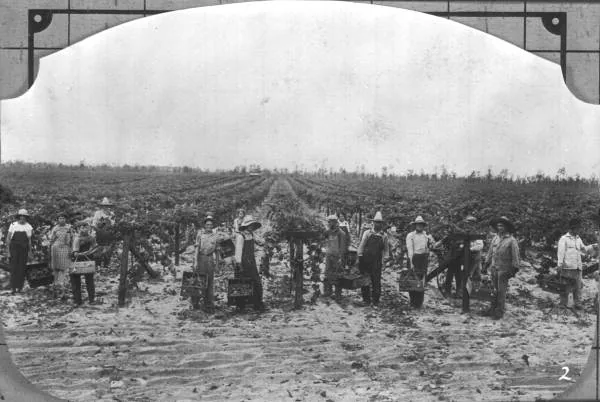
What came next was a small land rush in miniature. Their success grew into a thirty-acre spread called Niagara Villa, a genuine show place that visitors and other growers came out to walk. They rolled it into the Niagara Vineyards Company and the Orlando Grape and Fruit Company. Another outfit, Ink and Babcock, planted alongside them. Count what was in the ground and what was promised around Orlando and it added up to something like five hundred acres of grapes.

Picture that for a second. Where you now picture orange trees and lake views, there were trellised rows and pickers working the vines and crates of grapes loaded for the train north. For a few years around Orlando, the fashionable thing to plant was not the orange at all.
The winery that almost was
The excitement pulled in the biggest grape name in the state. Emile DuBois was a French immigrant who had built a real vineyard near Tallahassee, named it Chateau San Luis, and was shipping Florida wine and winning medals for it. He came and looked at the Orlando plantings. He was not impressed by northern grapes for serious wine, but he saw enough to start planning a winery here anyway.

His partner in the scheme was a New York winter resident named C.G. Frasch, who had already made something he called Orange Champagne. The plan was clever. Use the cull fruit and the late grapes, the ones that missed the good market once California started shipping, and turn them into wine instead of letting them rot.
Frasch believed all of it. After a hard freeze in 1895 he argued grapes should just replace citrus outright, and that Florida could become the Italy of America. He even figured a light local wine might do the country some good as its drink of choice instead of whiskey. What became of the Orlando winery, nobody wrote down. It simply stops appearing in the record, the way things do right before they fall apart.
What nobody could see
Because it did fall apart. The vines that took so well began, after a few good years, to sicken and die for no reason anyone could name. Growers blamed the shipping rates. They blamed the soil, the freezes, their own pruning. One Orlando man, Lyman Phelps, who had grown grapes in central New York before he came down, worked a vineyard in Orange County for four years, lost money the whole time, saw where it was heading, and got out.

The thing killing the grapes was far too small to blame. It was a bacterium living in the water channels of the vine, carried plant to plant by a leafhopper called the sharpshooter, a bug most growers never even noticed on the leaves. We call it Pierce’s disease now. Nobody understood how it worked until the 1950s, half a century after it had quietly erased the vineyards.
So the men around Orlando never had a chance, and never knew why. A vineyard would look vigorous, then thin, then gone, and the grower would curse his luck and plant something else. By 1907 the state horticultural society had stopped putting grapes on the program. For the next dozen years, as one account puts it, the record simply goes dead.
The vines looked perfect right up until they didn’t. The thing beating them was a bug too small to curse.
The grape that stayed
Here is the part the Rochester men missed. There was already a grape that grew out here without complaint, and it was growing on fences and over porches the whole time they were importing their fancy northern vines.

The muscadine, the thick-skinned native the old Florida families called the scuppernong, shrugs the disease off. It was not glamorous and it did not make the kind of wine a man could brag about at an exposition, which is exactly why the newcomers ignored it. The people who had been here a while just kept growing the vine that worked, and you can still find it on a back fence in these parts if you look.
What the land did with it
The remarkable thing is how little the whole episode scarred the place. A failed crop somewhere else leaves ruins. Out here the land just took it back. The dead vineyards became groves. The groves that the freezes and the taxes eventually wore down became pasture, and then, a long time later, lots.


Look at how the government mapped this corner of the county in the 1950s and you see the constant underneath all of it: a scatter of lakes, a few sand roads, and a great deal of green nothing. The one thing that outlasted the oranges, the grapes, the cattle and the freezes was the room. Lake Cawood Estates went up on the south shore only recently, a cluster of houses on acre lots, large on purpose, because room is still the thing people come out here to buy.
The sign on the pole
Which brings us back to the word on the street sign. The town of Vineland down the road officially took its name in 1918, and one dry account says it was only to stop the mail from getting confused with Orange City. Maybe so. But the name landed on a county that really had poured a decade and five hundred acres into becoming grape country, and whether the postmaster meant the rhyme or not, the road kept it.
The grapes are gone and the man who would have built the winery vanished from the record. What they were all planted on is still here, sitting out behind these houses. The oranges were never the only thing worth putting on that much room. They were just the one that didn’t catch a bug.


