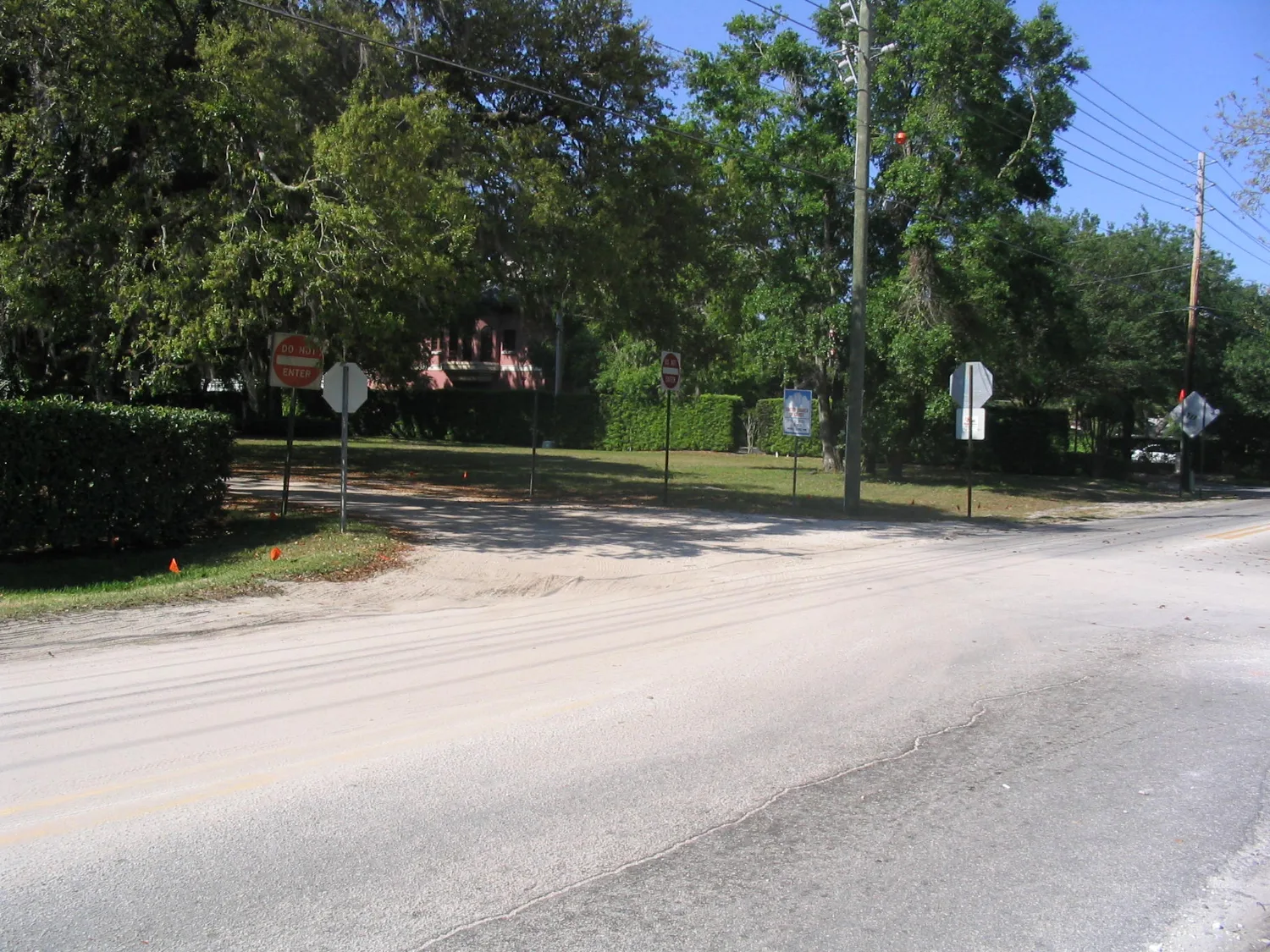
Drive into Windermere and the pavement just stops. Not because the town ran out of money, this is one of the wealthier corners of Orange County, lakefront houses, Disney a few minutes one way and some of the priciest golf in Florida the other. The roads are sand because the people who live on them keep voting to leave them that way.
You can get a street paved here, in theory. They turn it down. Again and again, for decades.
So what is a rich town protecting with a dirt road? Not the sand. The room.
Before it was guarded, it was grove
Long before anybody was writing ordinances about oak trees, this was orange country. Some of the best in the world, for a little while.
Windermere sits on a narrow neck of land between Lake Down and Lake Butler, two links in the Butler Chain, a run of eleven lakes stitched together by little canals. An Englishman platted a town on that isthmus in the 1880s and named it after a lake back home in England’s Lake District. The high, sandy ground between all that water turned out to be close to perfect for citrus.

By the early 1900s there were thousands of acres of orange trees planted around here, and a company in town busy selling the dream to anyone who’d buy in. Groves ran right down to the lakefront. For a stretch, this slice of central Florida sat in the heart of one of the largest citrus regions anywhere on earth.
A grove is not a subdivision
And here’s the part that still shapes the ground you’d buy today: a grove is not a subdivision. A grove is land, a lot of it, held by one family.

You needed room to grow oranges, and then you needed more room for everything the oranges demanded. The main house. A barn. A shed to grade and pack the fruit. Somewhere for the grove hands to sleep. Often a second little house out back for the grown son who worked the trees alongside you.
The whole way of living out here took it for granted that you’d spread out and build what you needed, one structure at a time, across a tract big enough to hold all of it. Nobody was sharing a wall.


Then, over two winters, it ended
The thing about oranges in central Florida is that every so often the cold comes down far enough to kill them. In the winter of 1894–95, it came down twice.

The first freeze hit in December 1894. Growers thought the worst had passed, and then a second, harder freeze came in February. Trees that had taken twenty years to grow split open and died back to the roots.
Land that had been changing hands at a thousand dollars an acre was suddenly worth about ten. A grove that had been worth a house became a grove worth a tank of gas, more or less overnight.
Most of the big growers gave up and chased the warm winters south, toward Polk County and beyond. A later run of hard freezes in the 1980s finished off most of what had crept back since. As a business, the oranges left.
What a freeze can’t do
But a freeze can kill a tree. It can’t shrink the land.
The groves died. The big parcels they’d been planted on didn’t go anywhere. The lakes were still there, the sandy ridges were still there, and the pattern the whole place had been carved into, one family, a lot of ground, a house and whatever else you felt like building near it, was already baked into the map.
The oranges are gone. The room they needed never left.

So when Windermere slowly became something else, first a quiet lake town, eventually a very wealthy one, it did it on grove-shaped lots. Big ones, with a lot of air between them. The subdivisions that filled in later had to work with ground that had always been measured out generously.
The town decided to keep it
And at some point Windermere looked at all that spread-out, low, leafy quiet and decided it was the whole point, then started protecting it on purpose.

The dirt roads are the famous part, the sand streets and brick lanes and hundred-year-old oaks the town guards by ordinance, turning down the asphalt over and over. But the roads are really just the visible edge of it. What they’re keeping is the grove-era feel underneath: few houses to an acre, room between them, trees older than anyone living on the street.
When Disney was carving its park out of the palmetto a few miles east in the late 1960s, some of the executives running the job chose to live out here, on the big quiet lots, and drive in. They could have lived anywhere in Orange County. They picked the room.
So that dead-end sand road, the one the rich town won’t pave, it isn’t really about the dirt, and it isn’t nostalgia. It’s the last plain trace of a grove. The oranges are gone. The ground they needed is still here, and a gated street like Casabella’s, its oversized, roughly half-acre lots tucked between the same lakes, is sitting on the exact idea the growers started with: enough room to build more than one life on.


