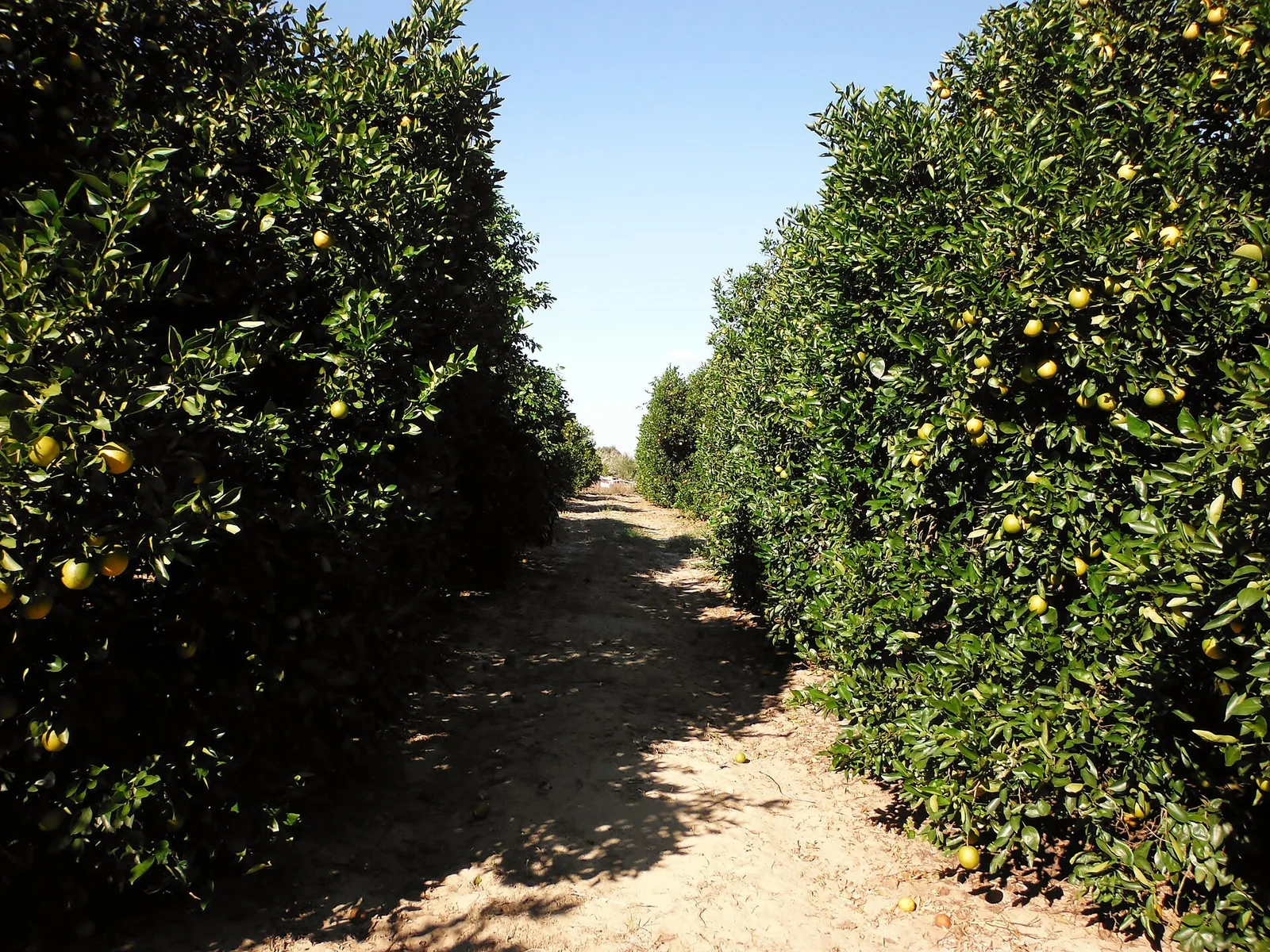
There’s a guard gate out on West Lake Butler Road, and behind it sits Bellaria: big Mediterranean houses on lots that run from a half-acre to better than an acre, most of them looking out at Lake Burden. It is about as planned as a place can be, a guarded entrance, a review board, rules about what you can build and how it has to look.
Which makes the ground underneath it kind of funny. Because the reason all that planning exists is that, not very long ago, this exact corner of Orange County was a grove nobody could sell.
So how does one of the most carefully drawn pieces of southwest Orange start life as a dead orchard? That’s the whole story, and it runs back through oranges, cattle, and one very stubborn winter.
First it was grove and cattle
Drop back a few decades and the land out here looked like most of the high, sandy country west of Orlando: citrus on the good ridges, cattle on everything else.

The oranges got the attention, Orange County didn’t get that name by accident, but the cattle were older. Long before the fence laws, cow hunters ran half-wild herds through the palmetto and scrub on open range, the animals wearing nobody’s brand until somebody rounded them up. An artist came through central Florida in the 1890s and sketched them for a magazine, and the name he used stuck: cracker cowboys.

Groves and cattle have one thing in common: both of them need room, and lots of it. You don’t run cows or grow a few thousand trees on a quarter-acre. So the people who settled this country settled it spread out, one family holding a big piece of ground, neighbors a good walk away.
You built what you needed, out back
And once you’ve got that much land, you don’t build one house and call it done. You build what the place needs, a piece at a time.

There was the main house. A barn. A shed to grade and pack the fruit. A smokehouse, a well house, a pen. And very often a second small place out back, a cabin for the grown son who worked the grove, or a room for the hands who came through at picking time.

Nobody thought twice about it. A lot wasn’t a slot for a single house, it was ground you kept adding to as the family grew and the work demanded. The habit of putting up a second small home out back is older out here than the subdivisions that eventually paved over it.
Then the cold came and stayed
The catch with oranges in central Florida is the one that caught everyone: every so often the cold slides far enough south to kill the trees. Most winters it doesn’t. Then a winter does.

The 1980s were a run of those winters, one after another. Growers would lose a crop, replant, and lose it again. The one people out here still name is the freeze that came over Christmas weekend in 1989, a cold so hard it finished what the earlier freezes had started. After that, the big commercial citrus packed up and chased the warm winters south, and the groves of southwest Orange went quiet for good.
Frozen out, then fenced in
Here’s where it gets strange. A dead grove is still land, and land is usually still worth something. But right as the growers hit bottom, the county drew a line that took even that away.
In 1991, trying to keep the southwest corner from sprawling into a mess of strip malls, county planners zoned this whole rural wedge for agriculture only. On paper it made sense. On the ground it meant a grower with no oranges left couldn’t grow anything that paid, and couldn’t sell the land to anyone who wanted to build, either. No fruit, no buyer. Just acres of frozen trees and a tax bill.
They couldn’t sell the land. So they decided to plan it.
So they drew a town
In November of 1992, the growers and a few land people sat down together at a restaurant out on the highway called the Ranch House and started asking a different question. Not “who’ll buy my dead grove,” but “what if we stop selling it piece by piece and plan the whole thing at once.”
What came out of that room, and the years of meetings after it, was Horizon West. The families pooled their land, working with the county instead of fighting it, and drew up not a subdivision but a town: a set of walkable villages, each with its own center and schools and parks, wrapped around the lakes. The county signed off on the framework in 1995. It was the first plan of its kind the state of Florida ever approved.

The first village, Lakeside, broke ground in the late 1990s, and the rest followed over the next twenty-odd years. Bellaria, built out in the years around 2010 on the shore of Lake Burden, sits right at the edge of all of it, one of the gated pieces that filled in as the old grove land became neighborhoods.
What the freeze couldn’t take
Lose the trees and you lose the crop. You don’t lose the shape of the land.

The lakes stayed. The ridges stayed. And the thing the whole place had been carved into, one family, a big piece of ground, room to build more than one thing on it, was already pressed into the map before a single villa went up. The growers who planned Horizon West weren’t starting from a blank sheet. They were working with parcels that had always been measured out generously, because groves and cattle had needed them that way.

So Bellaria’s half-acre-and-up lots along Lake Burden aren’t a new idea. They’re the oldest idea out here, dressed in stucco and a gate: enough ground around a house to build a whole life on, not just a bedroom and a lawn.

That guard gate on West Lake Butler Road makes Bellaria look like the most planned thing for miles. In a way it is. But the room it’s guarding was there long before the plan, it belonged to a grove, and the grove got it from cattle, and all of them kept it for the same plain reason: out here, you were always meant to have space out back for whatever came next.


